
Want lessons on the same day and time every week?
Don’t see the instrument you’re interested in? Tell us!
How it works
What you can expect when you choose the Center for Musical Arts

1. CONSULT OR SIGN UP
Book an expert consultation or your first lesson at a time that works for you. Acuity, our Award-winning scheduling software, makes managing appointments easy.

2. Learn
Our team hand picks the teacher who best fits you and your goals. Then, you and your teacher tailor lessons to empower your musical journey.

3. GROW
Subscribe monthly to save on weekly lessons and immerse yourself in group classes like: choir, jazz orchestra, workshops, and more.
Develop a lifelong skill
Learn How To Play Piano
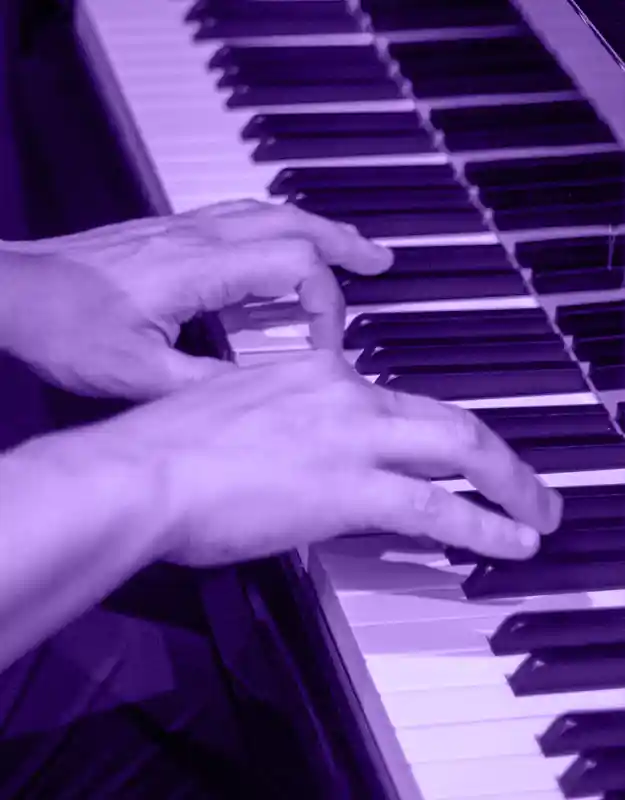
Unlock your musical potential by learning to play piano at CMA. Our expert instructors will guide you through personalized lessons, helping you master key techniques and express yourself through the most versatile instrument in music.
BENEFITS TO LEARNING PIANO
Comprehensive brain development: Mastering the piano requires reading two clefs simultaneously while coordinating independent movements in both hands and feet. This intense multi-tasking builds neural connections, sharpens spatial-temporal reasoning, and dramatically enhances long-term focus and cognitive flexibility.
A foundation for all music: The piano visualizes music theory clearly across its 88 keys, making fundamental concepts like harmony, scales, and chords intuitive. Learning piano builds a rock-solid musical framework that makes picking up any other instrument significantly easier.
HISTORY OF THE PIANO
Invented in Italy by Bartolomeo Cristofori around 1700, the piano revolutionized keyboard music by solving a major limitation of its predecessor, the harpsichord: the inability to play with dynamics. By using a hammer mechanism, the pianoforte allowed players to produce soft (piano) or loud (forte) tones based on touch.
During the 18th and 19th centuries, the instrument evolved rapidly and became the beating heart of Western classical music. Giants like Wolfgang Amadeus Mozart, Ludwig van Beethoven, and Frédéric Chopin expanded its technical possibilities, transforming the piano into both a grand concert instrument and a staple of home entertainment.
Today, the piano serves as an indispensable tool across virtually every genre, from classical compositions and jazz improvisation to pop songwriting and electronic production. Its timeless design and limitless expression secure its place as the ultimate foundation of the musical world.